A superb and grand scale oil on oak panel portrait of a lady, dressed in black with sumptuous detail, the fitted bodice is embellished with embroidery with central rosette and bow to the waist, the cuffs and top of the bodice are of lace which is beautifully painted with fine detail, she is wearing a ruff of cartwheel proportion that were in high fashion from the 1580s until around 1610. The ensemble is topped off with a large brimmed hat. On each wrist she wears three strings of glass beads and in her right hand is a prayer book. To the left is the inscription “ Suprema optima Mundi , Aetas 1632” which translates The highest and most excellent things of the world. in the year of their age 1632. The sitter is clearly a woman of middle age who is wearing clothing that was fashionable when she was a young woman, this was common practice at this period when strict religious practices encouraged strong conservatism.
The work has been attributed to the Unknown Follower of Hieronymus Custodis first identified by art historian Sir Roy Strong in 1969 in his book The English Icon. The artist remains nameless, known only through a distinct stylistic lineage and technical debt to Hieronymus Custodis (an exiled Flemish portrait painter active in London during the late 1580s and early 1590s). Scholars believe this follower likely inherited Custodis's studio, workshop, or pattern book after Custodis's death around 1593. The paintings closely mimic Custodis's meticulous Flemish-influenced style, characterized by flat, heraldic detailing, stiff linear precision, detailed Elizabethan lace and costumes, and inscribed ages or dates detailing the sitters.
Notable Attributed Works:
Sir John Puckering (c. 1592)
Sir John Fortescue (1597)
Portrait of Henry Thoresby (circa 1600)
Sir John Hawkins (attributed/discussed via Strong's The English Icon)
English dated 1632
Height 110.5cm ( 43 1/2”)
Width 98cm (38 1/2”)

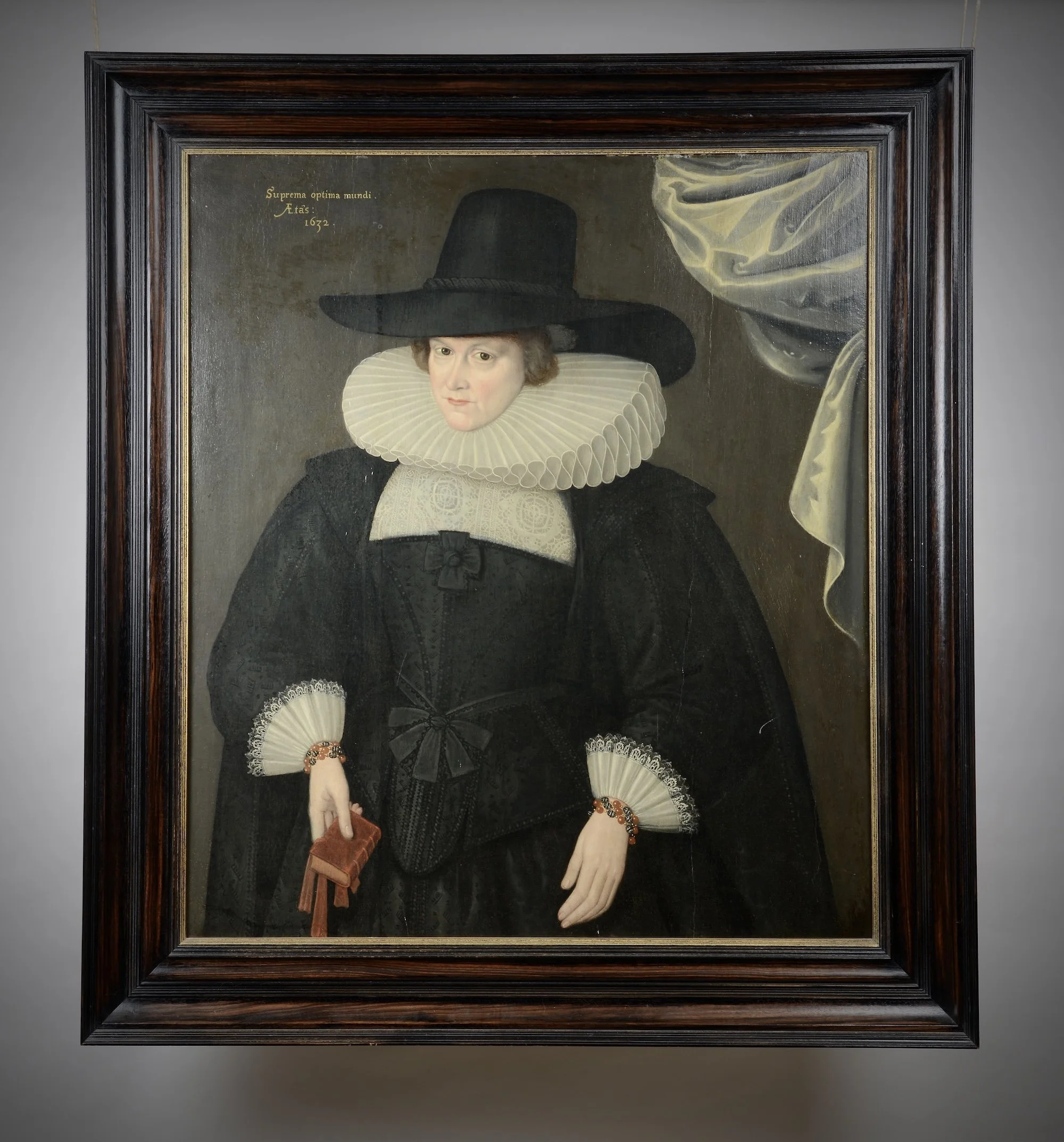 Image 1 of 6
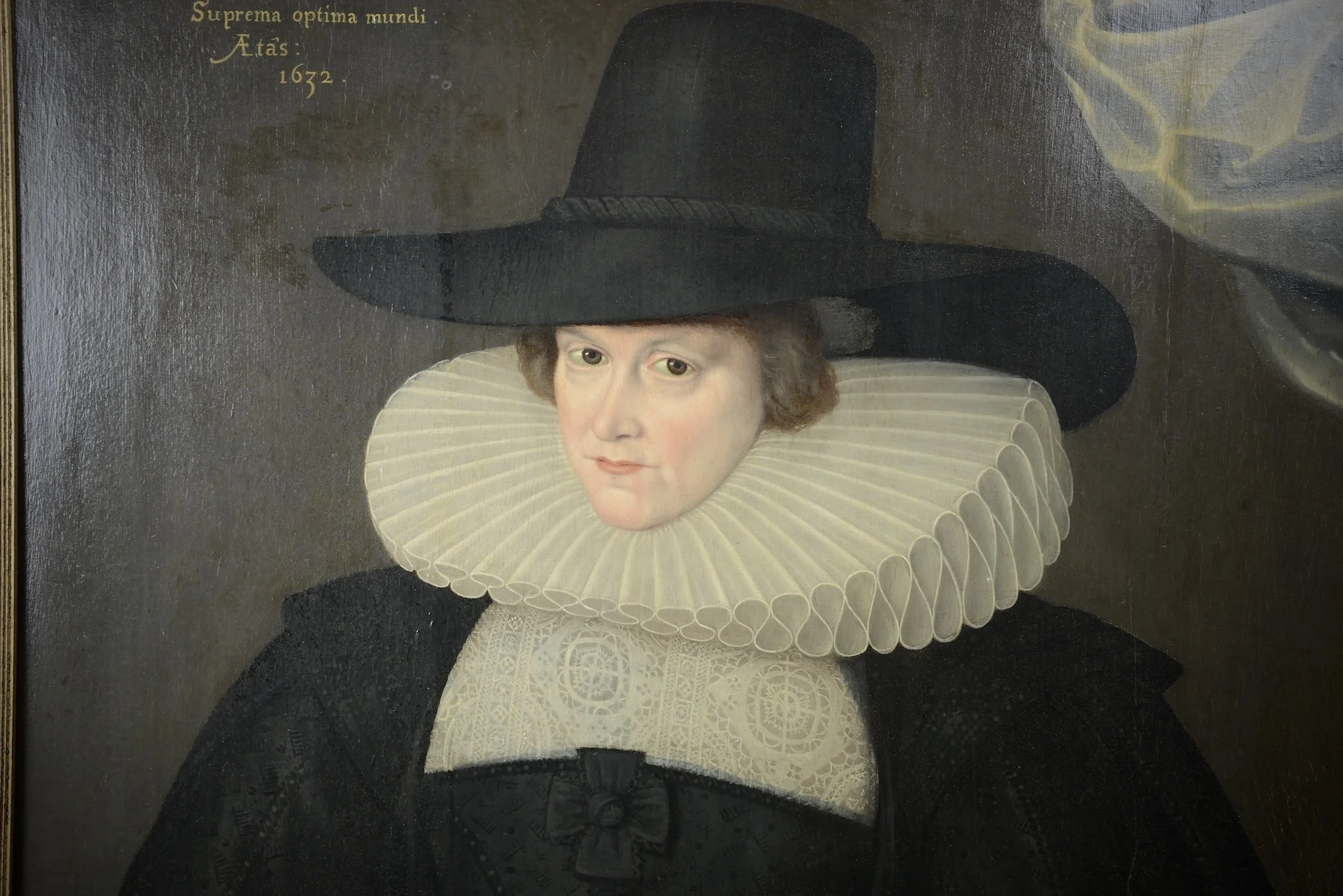 Image 2 of 6
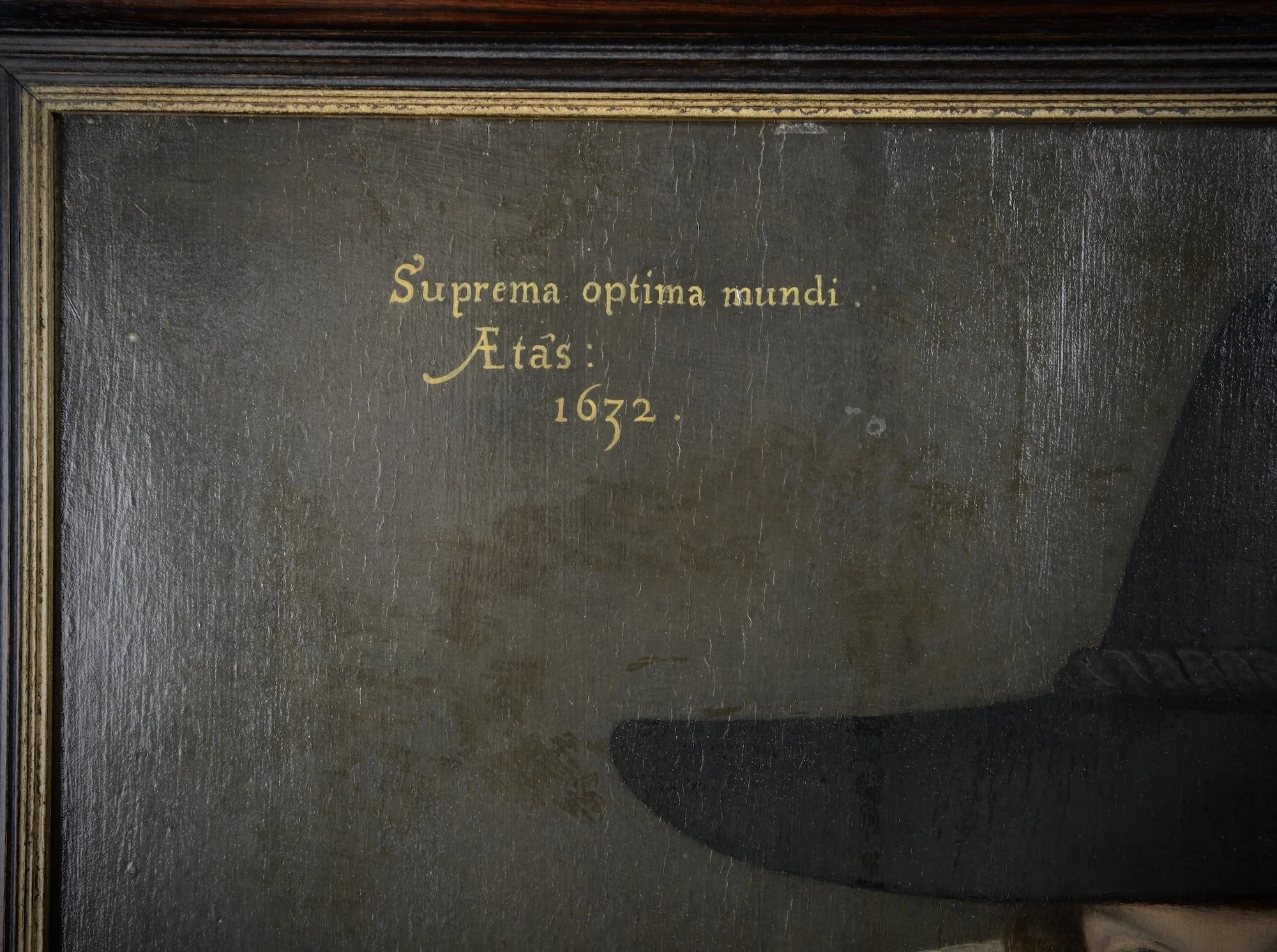 Image 3 of 6
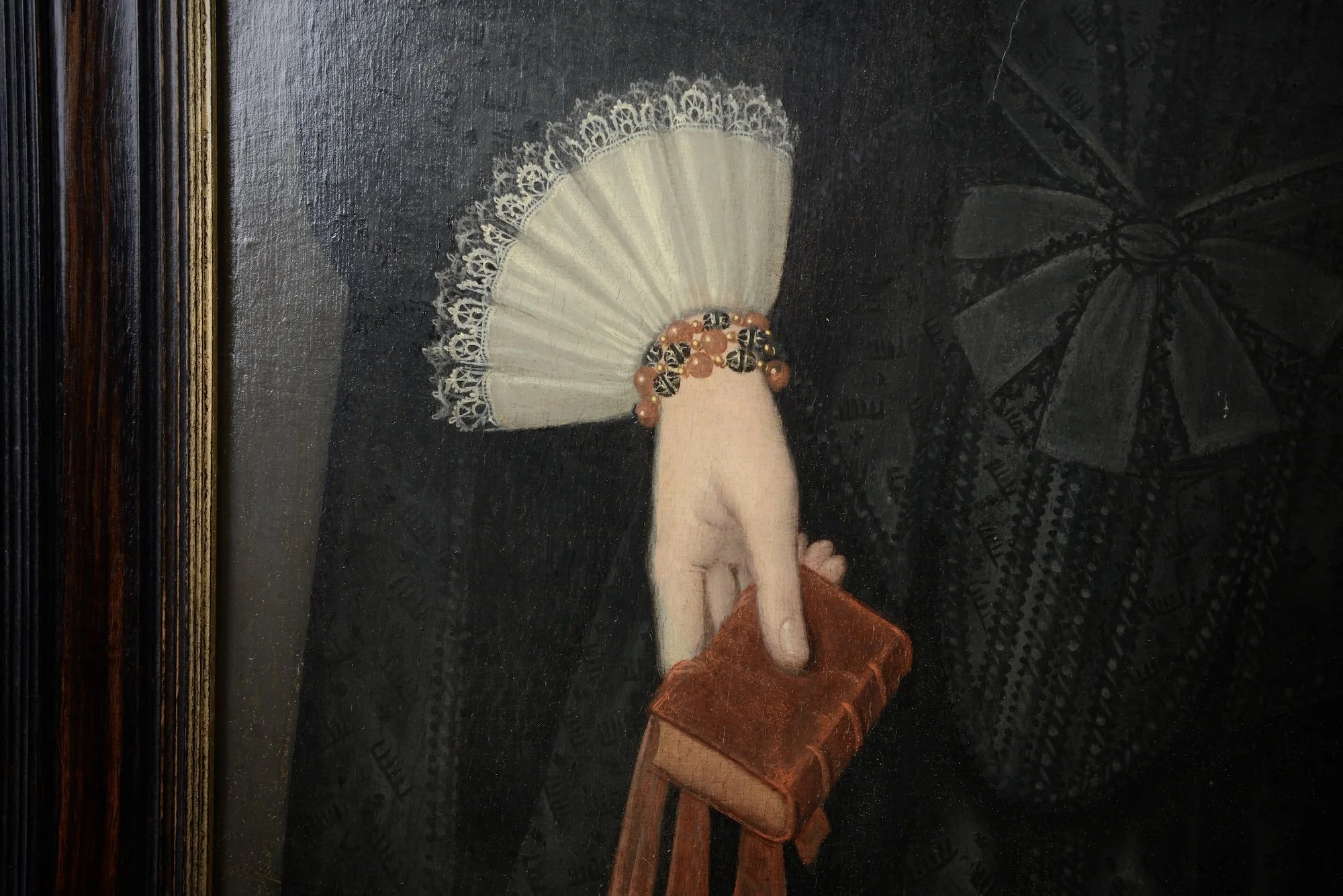 Image 4 of 6
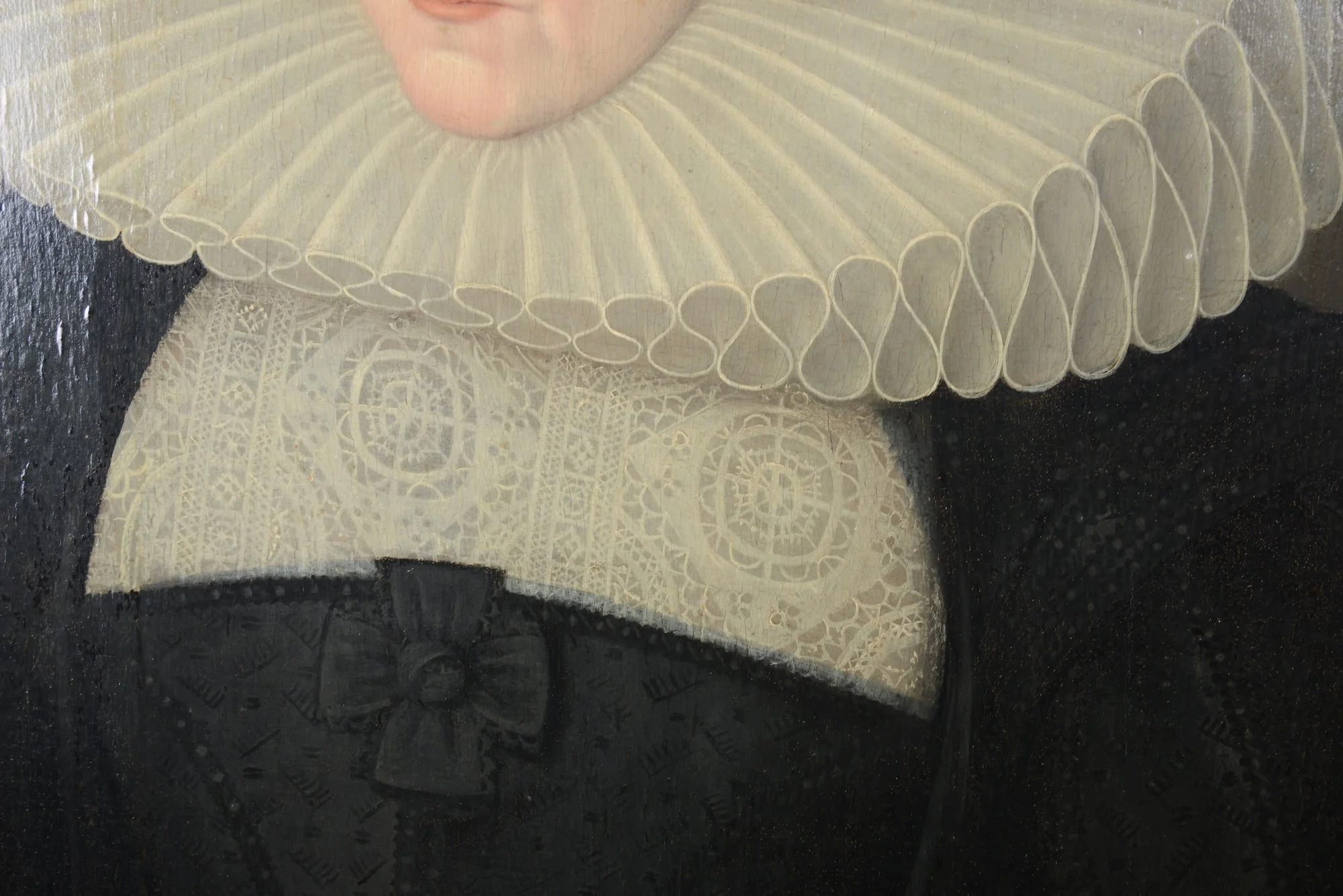 Image 5 of 6
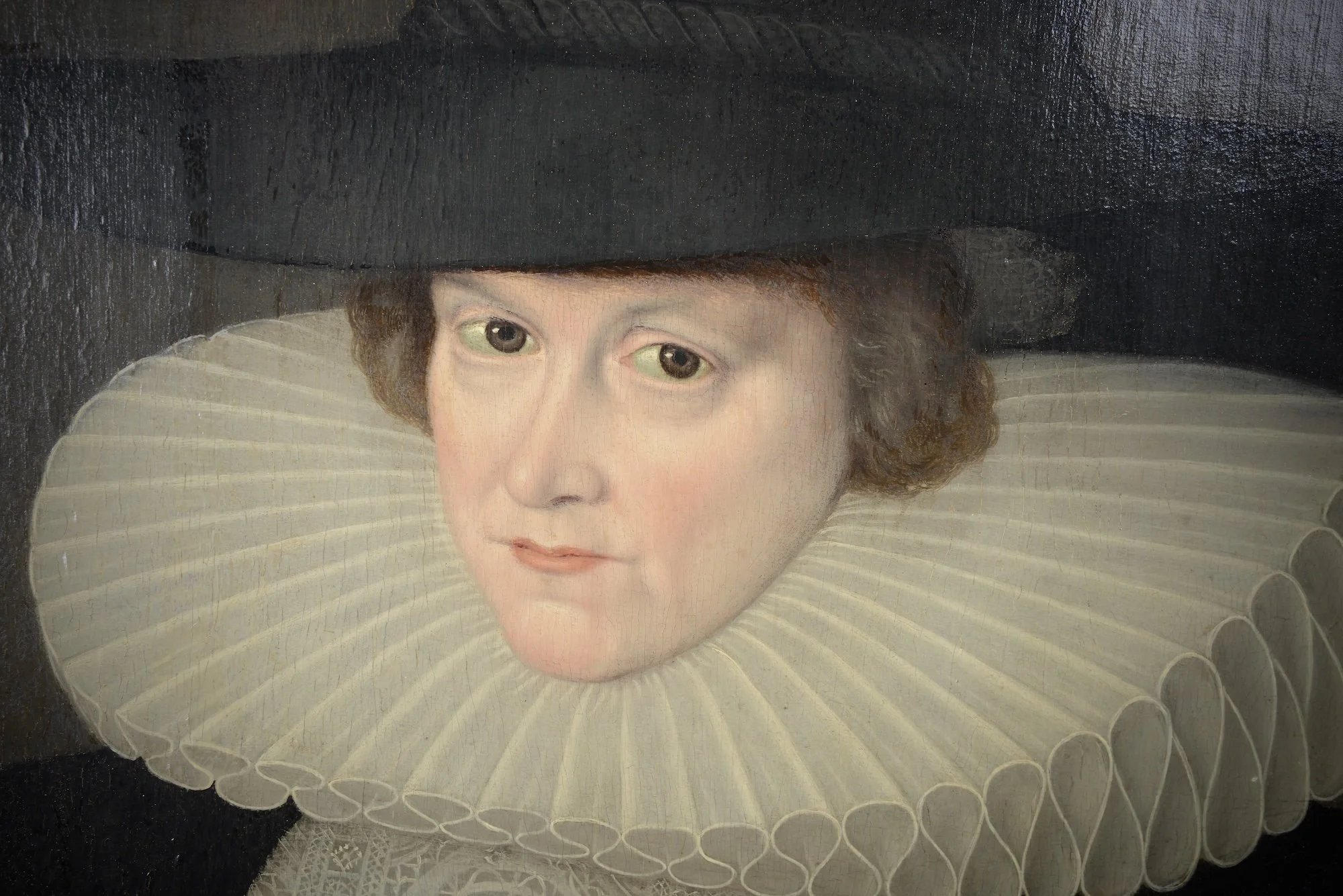 Image 6 of 6