An extremely rare and important open arm chair of grand proportion. This fine chair is made entirely from walnut which makes it extremely rare, whether due to it’s susceptibility to woodworm and decay or the fact that it was not yet fashionable, walnut is not often found in English furniture before about 1660 when it was introduced by French cabinet makers. Due to the scale and quality of the chair we can ascertain that it was meant to impress. the use of restrained, well executed carving, the moulding around the single piece seat, the bold cresting rail all contribute to a chair of exemplary proportion and decoration. The arms are beautifully shaped with subtle punch and scratch carved decoration, the turned legs are balanced and well drawn as are the underarm supports. Were this chair in oak as expected, it would still be an excellent example. The use of walnut which was widely used by this period in Italy, France and Spain suggests that the individual that commissioned it may well have been a well travelled individual, an ambassador or merchant perhaps. We can only contemplate. The patina is soft and mellow with good graduation. The chair comes with a bespoke silk velvet swab cushion which is of considerable age.
The condition is superb with no replacements or breaks and only a smattering of random historic woodworm holes which are long dead, as always it has been treated for good measure. This is an opportunity to own an extraordinary and likely unique chair from this early period
English. Circa 1630
Height 123 cm ( 48 1/2”)
Width 70 cm (27 1/2”)
Depth 58.5cm ( 23’)
Seat height 57.5cm (20 3/4”)

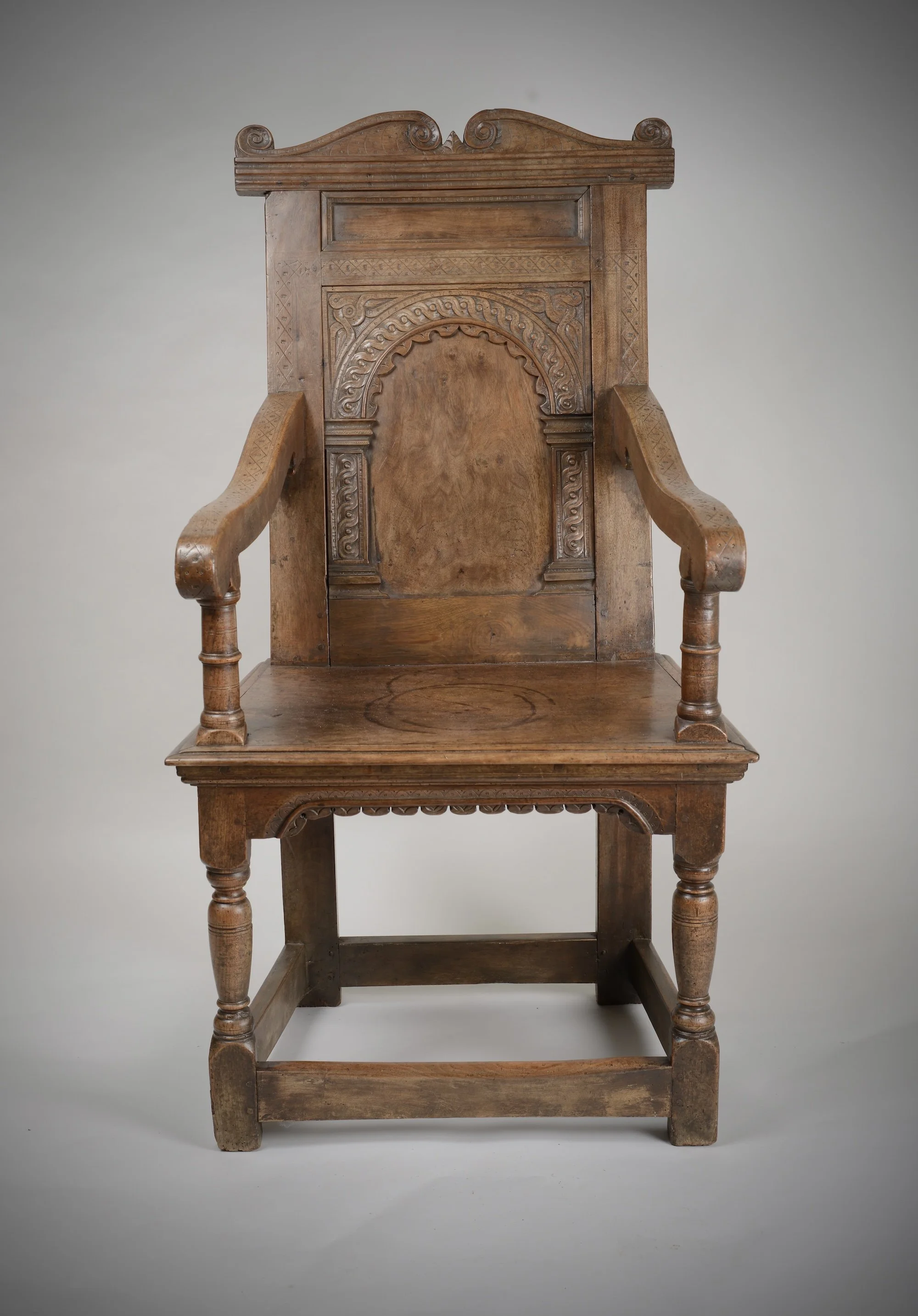 Image 1 of 16
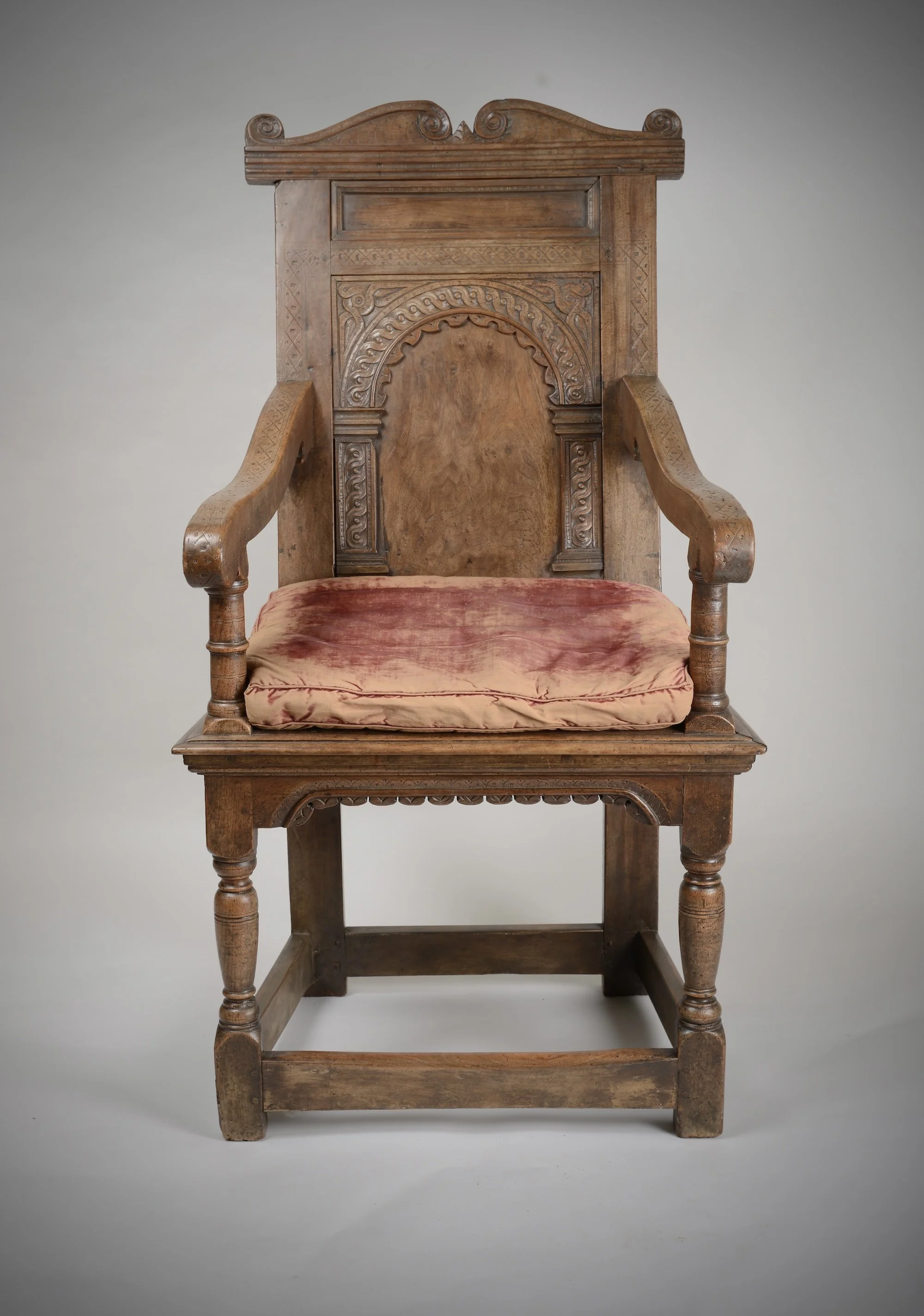 Image 2 of 16
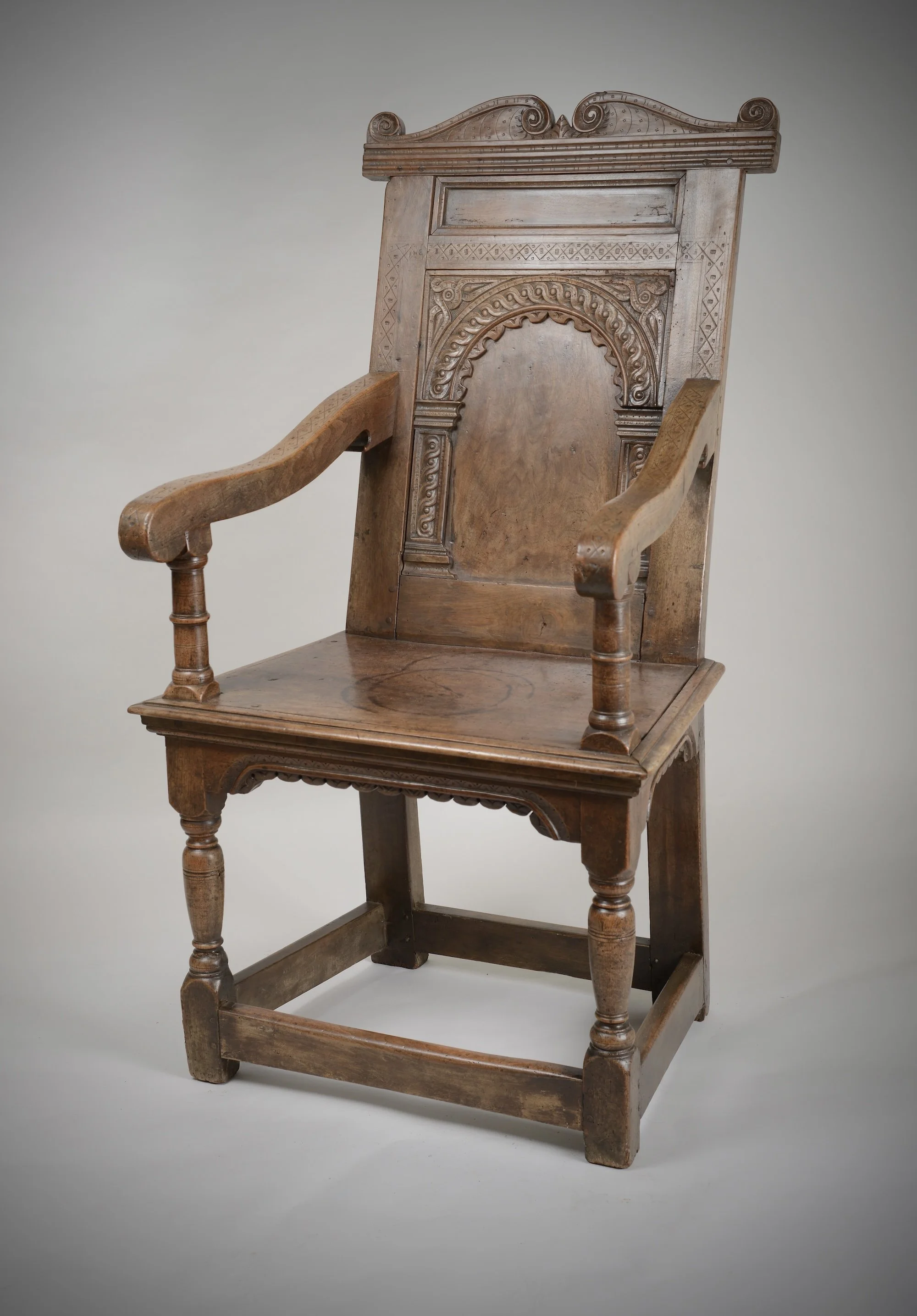 Image 3 of 16
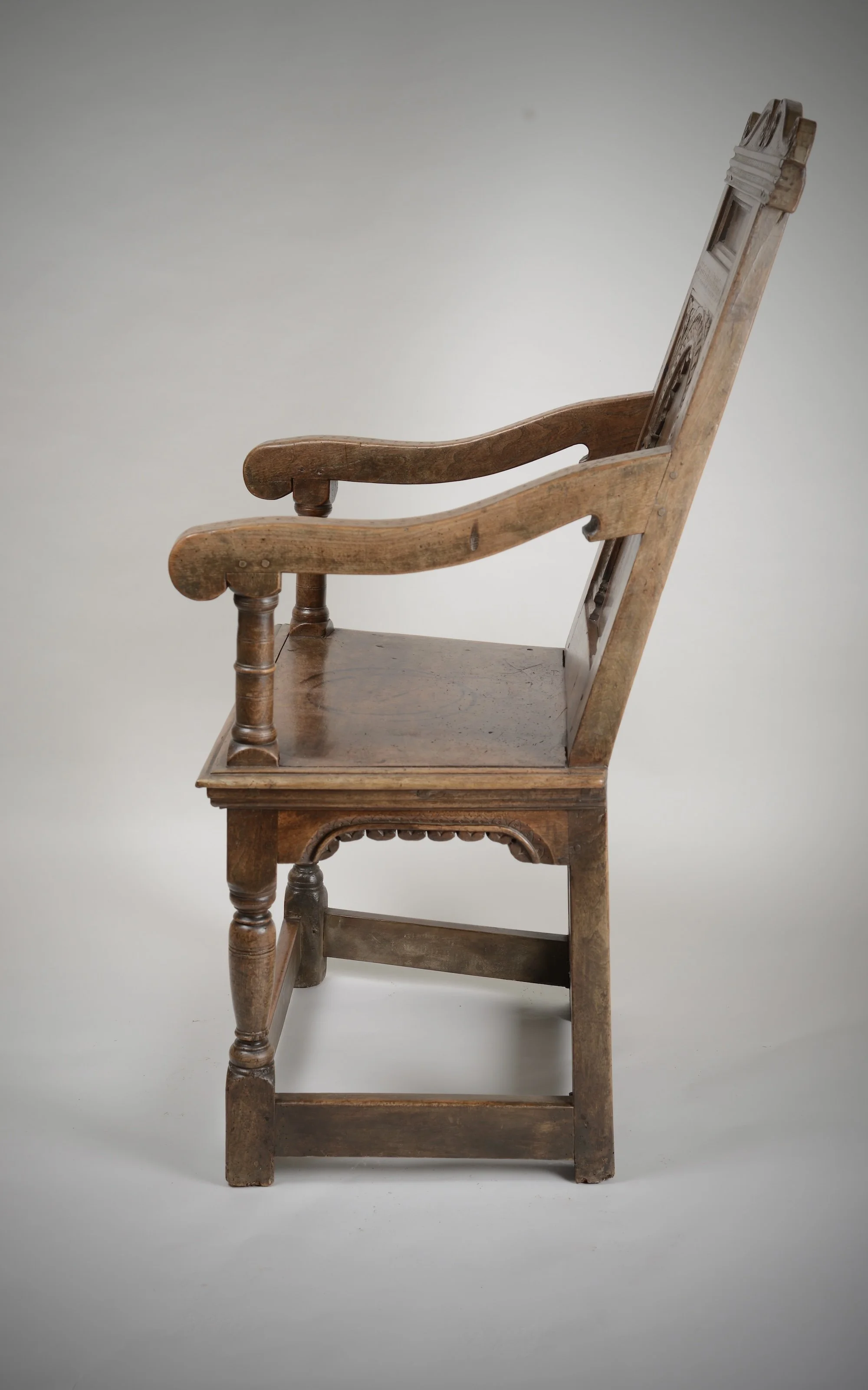 Image 4 of 16
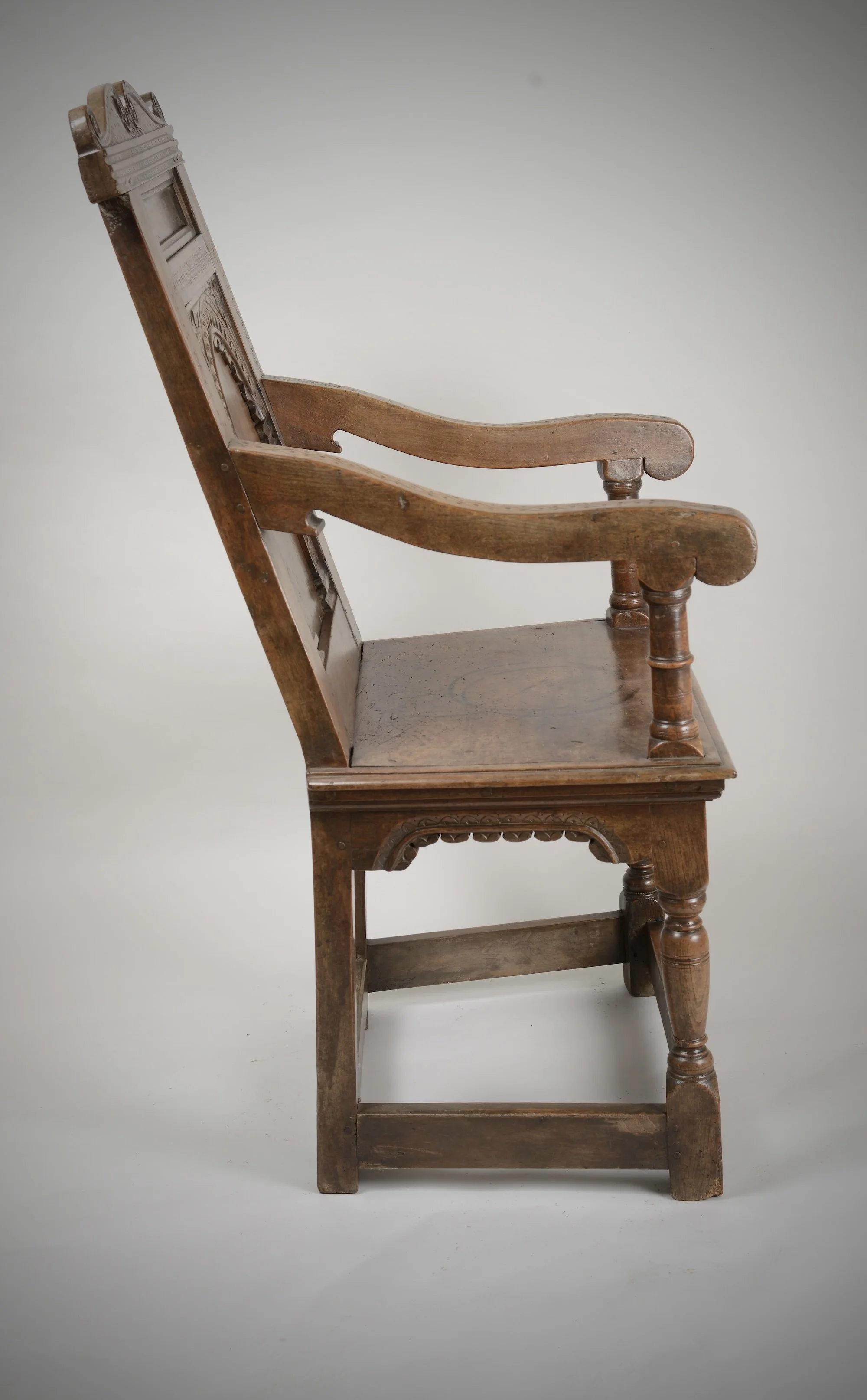 Image 5 of 16
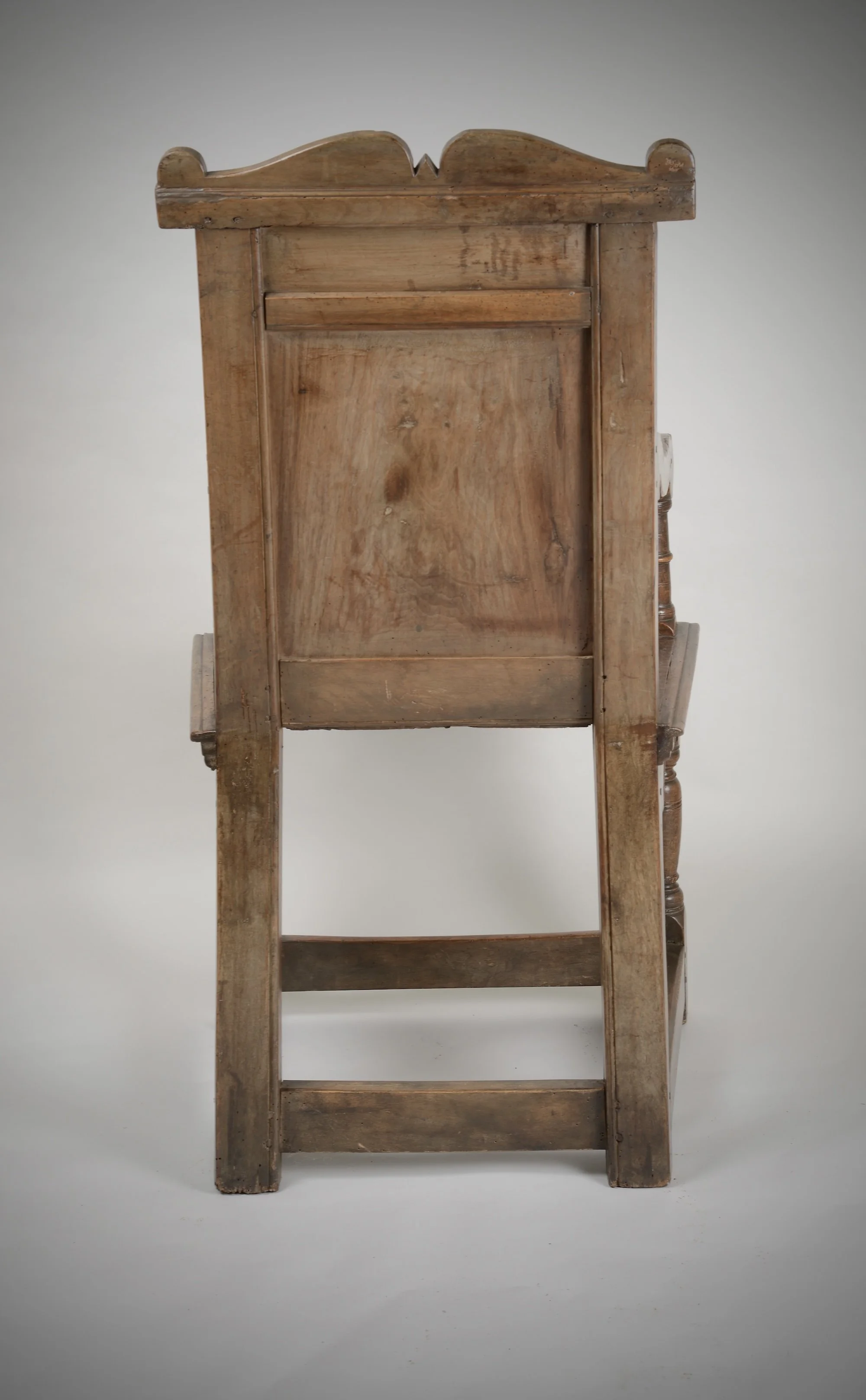 Image 6 of 16
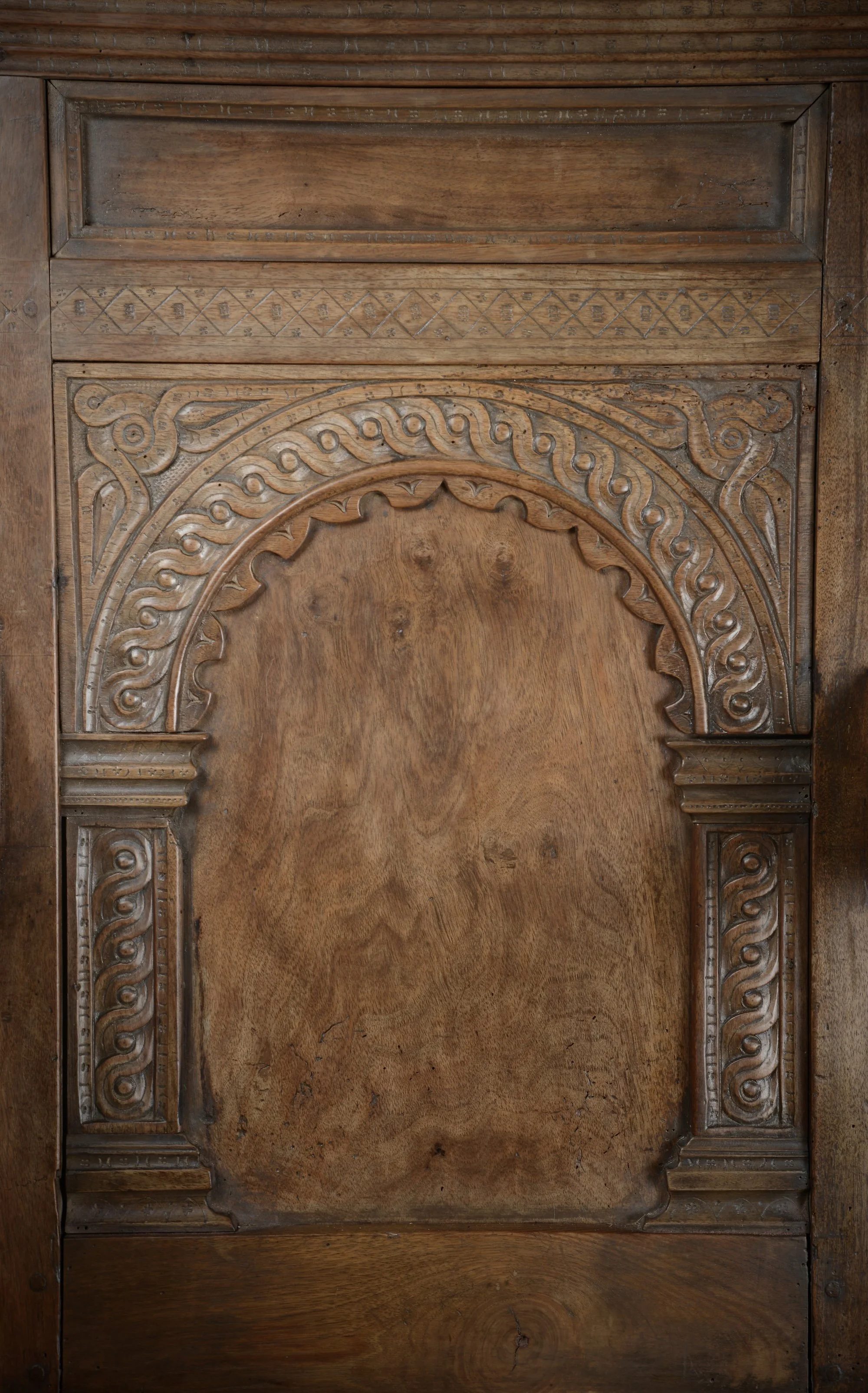 Image 7 of 16
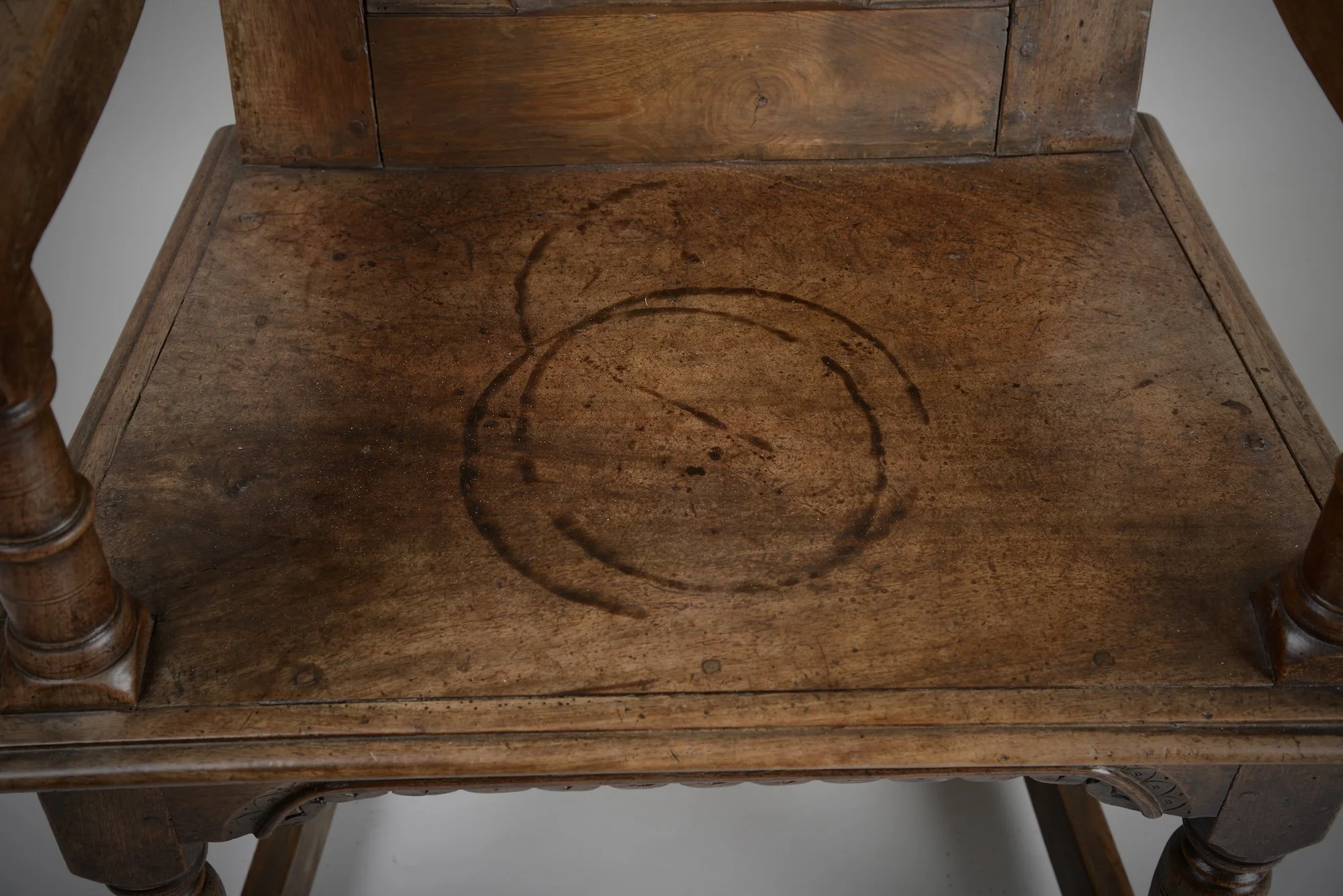 Image 8 of 16
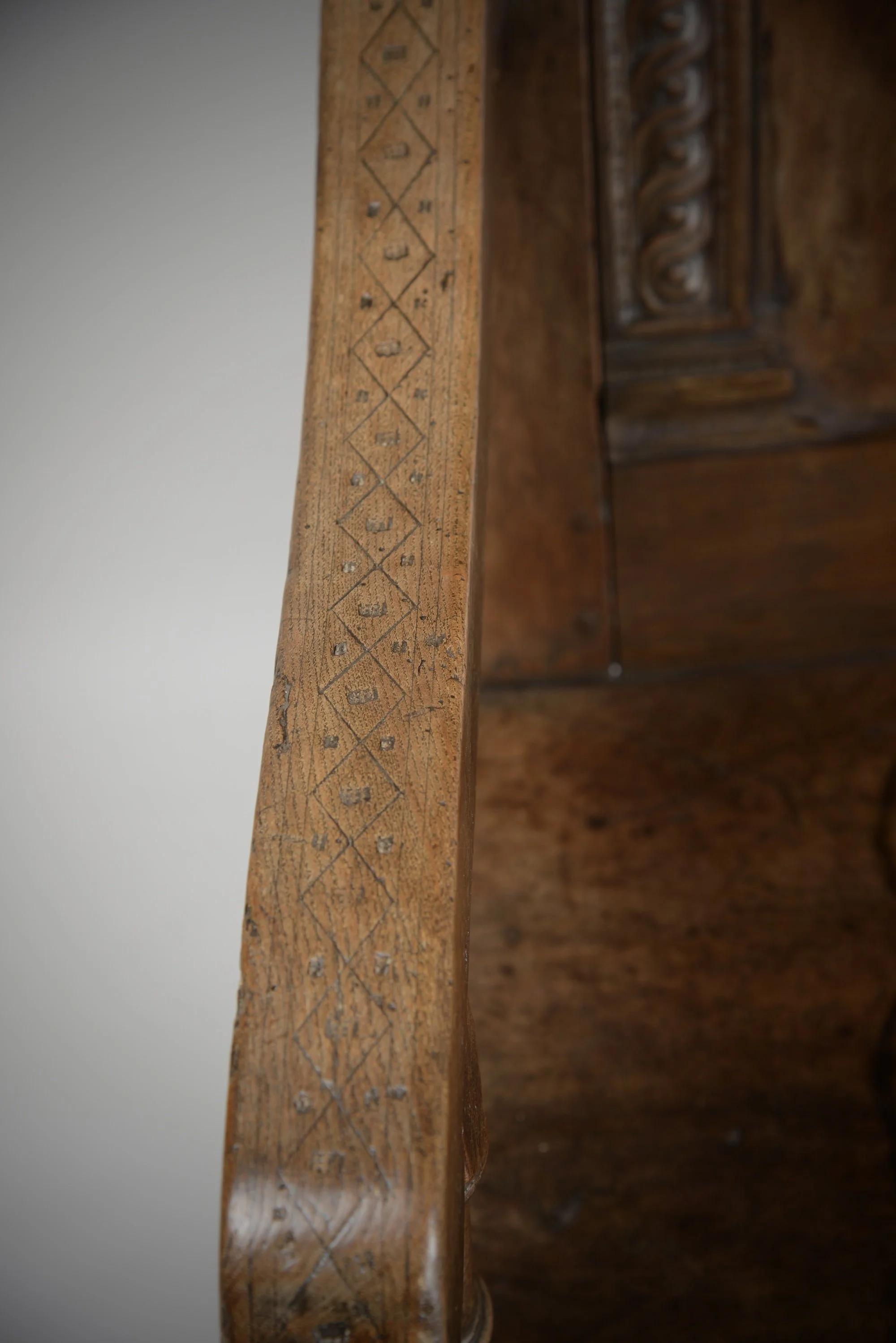 Image 9 of 16
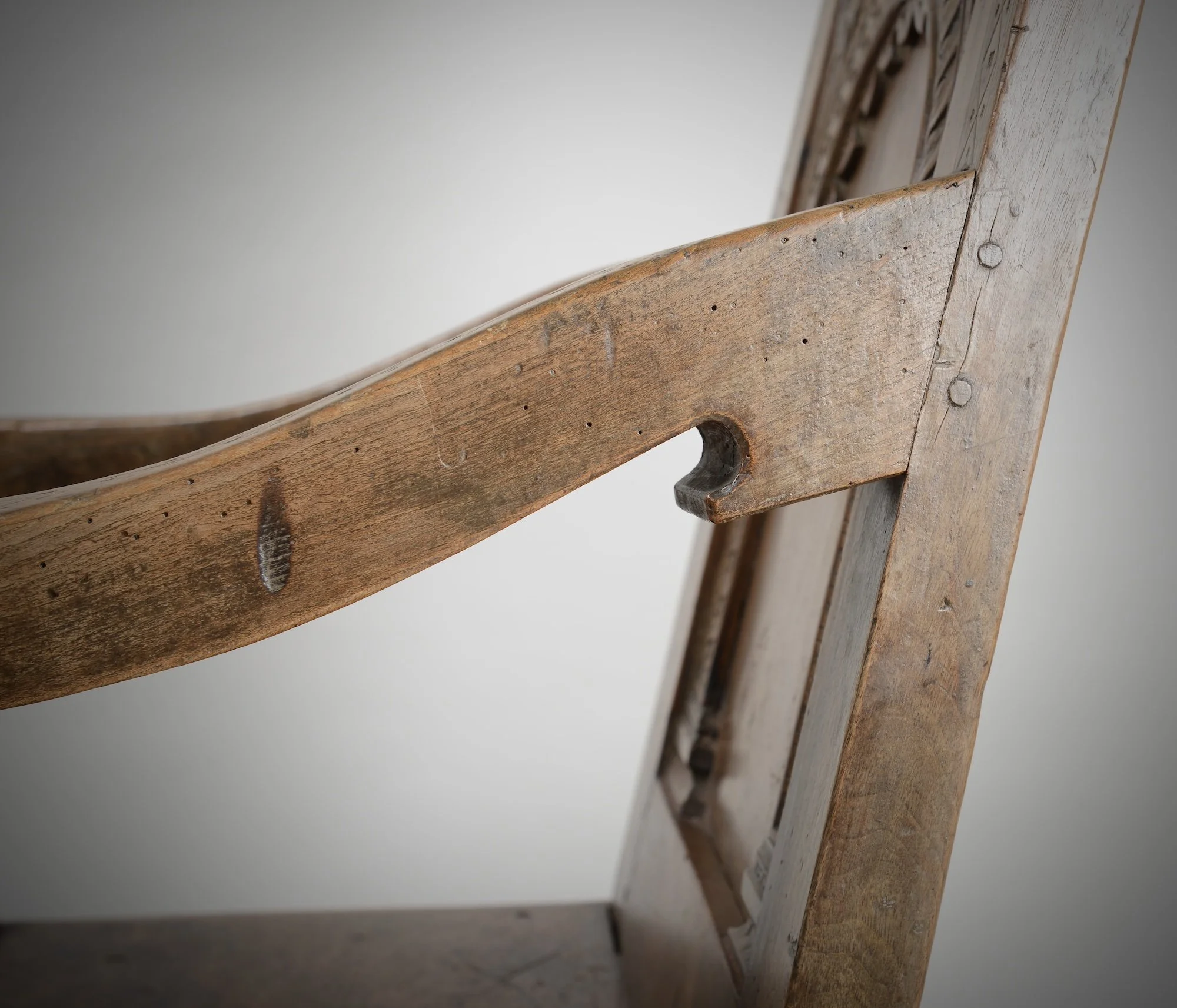 Image 10 of 16
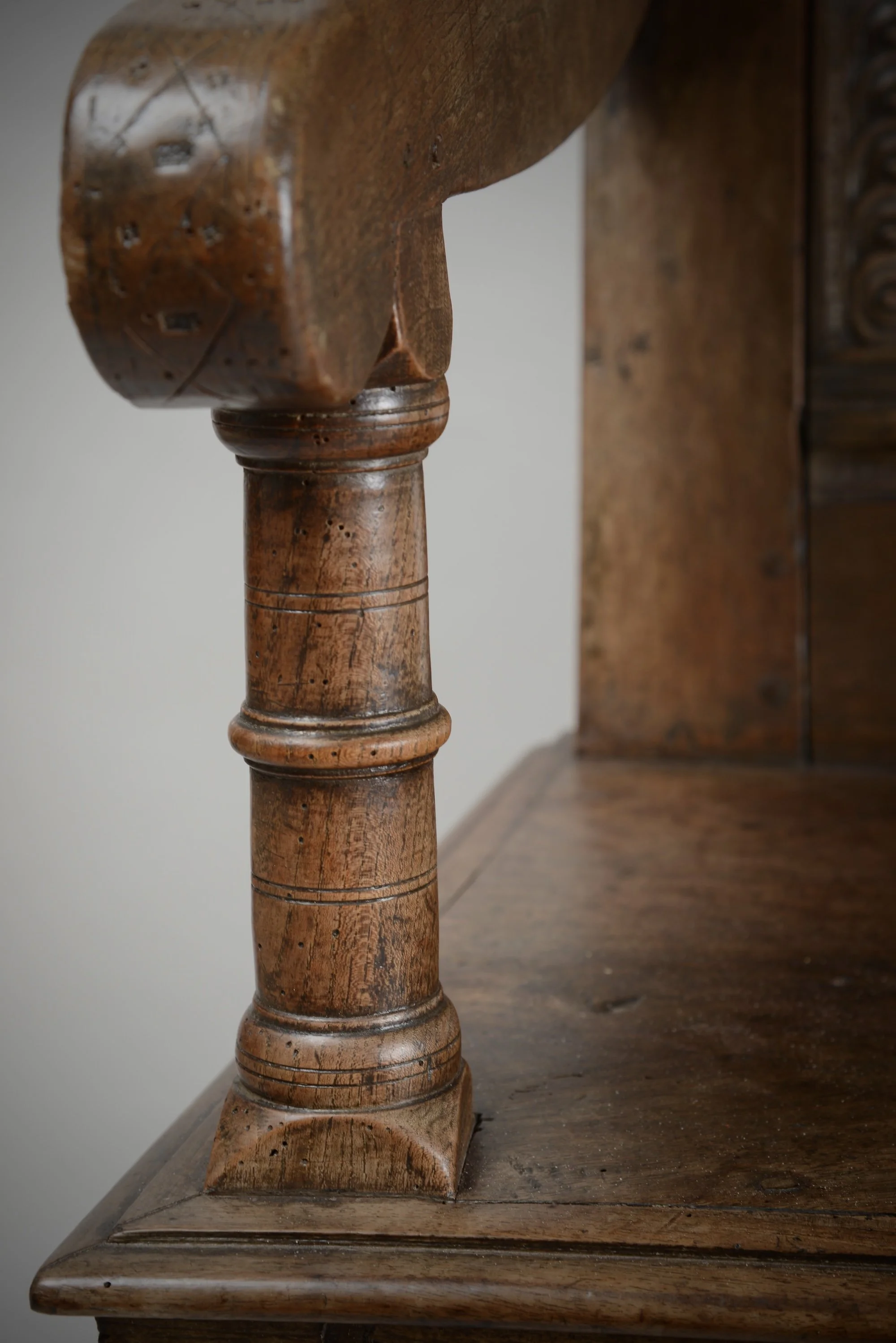 Image 11 of 16
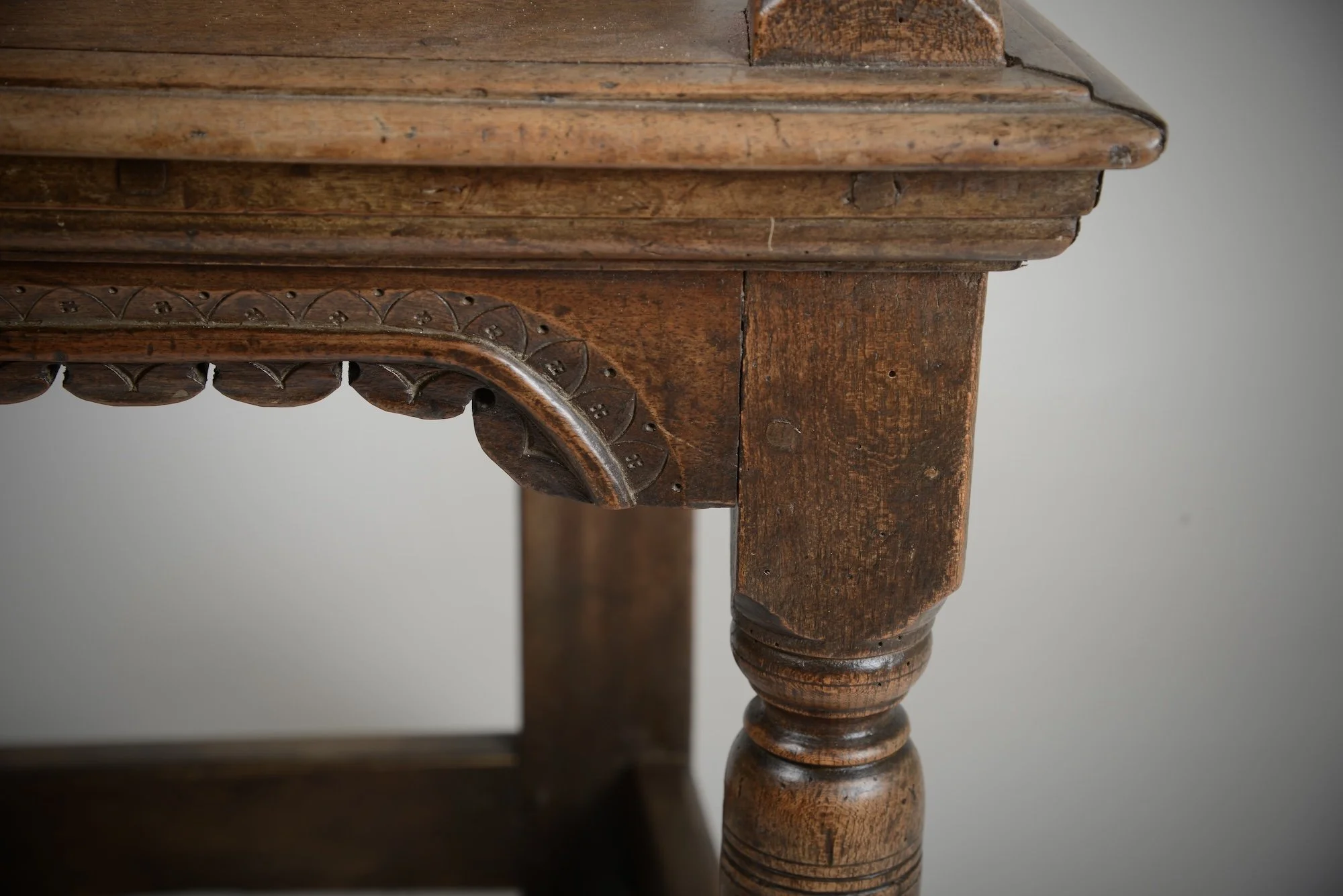 Image 12 of 16
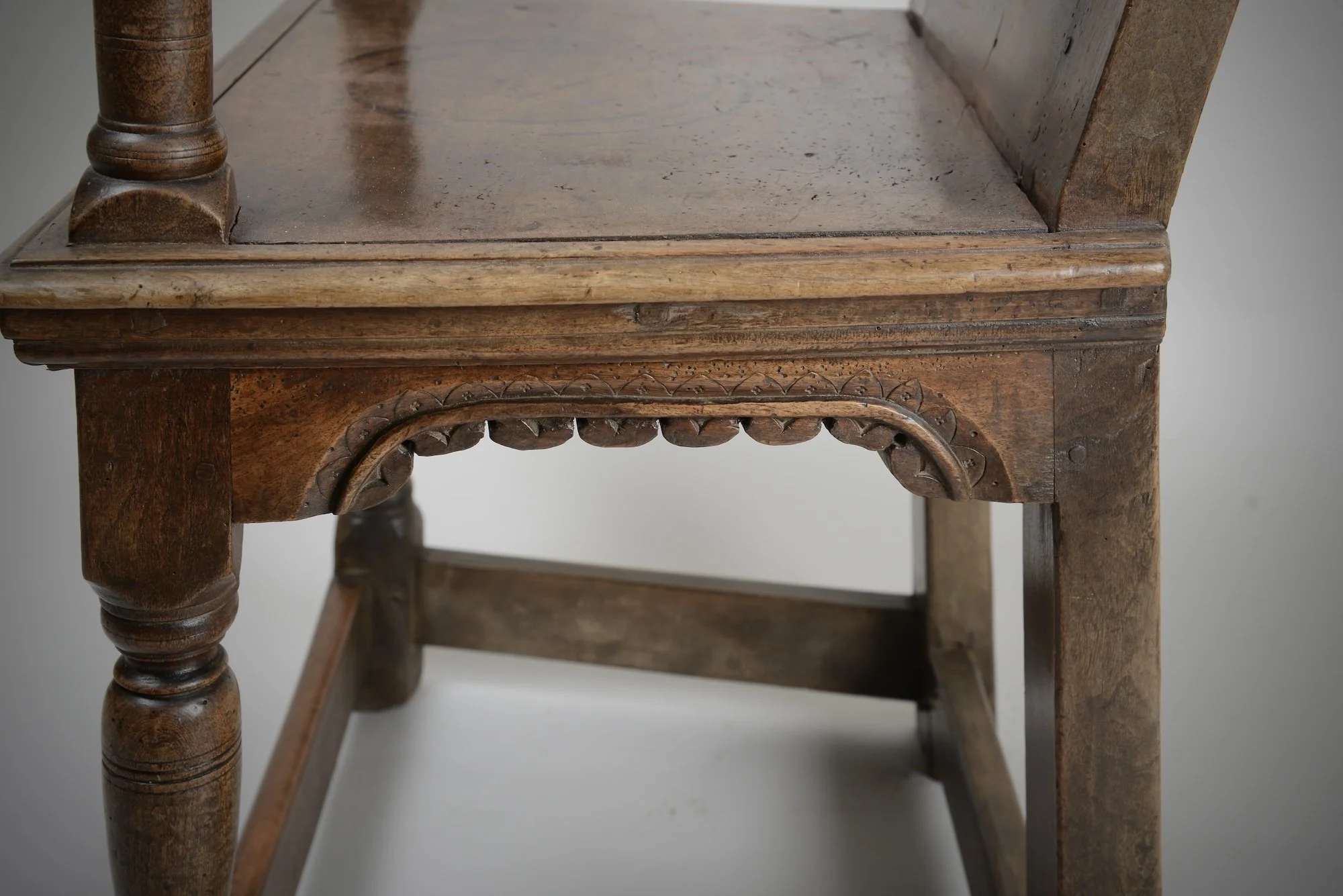 Image 13 of 16
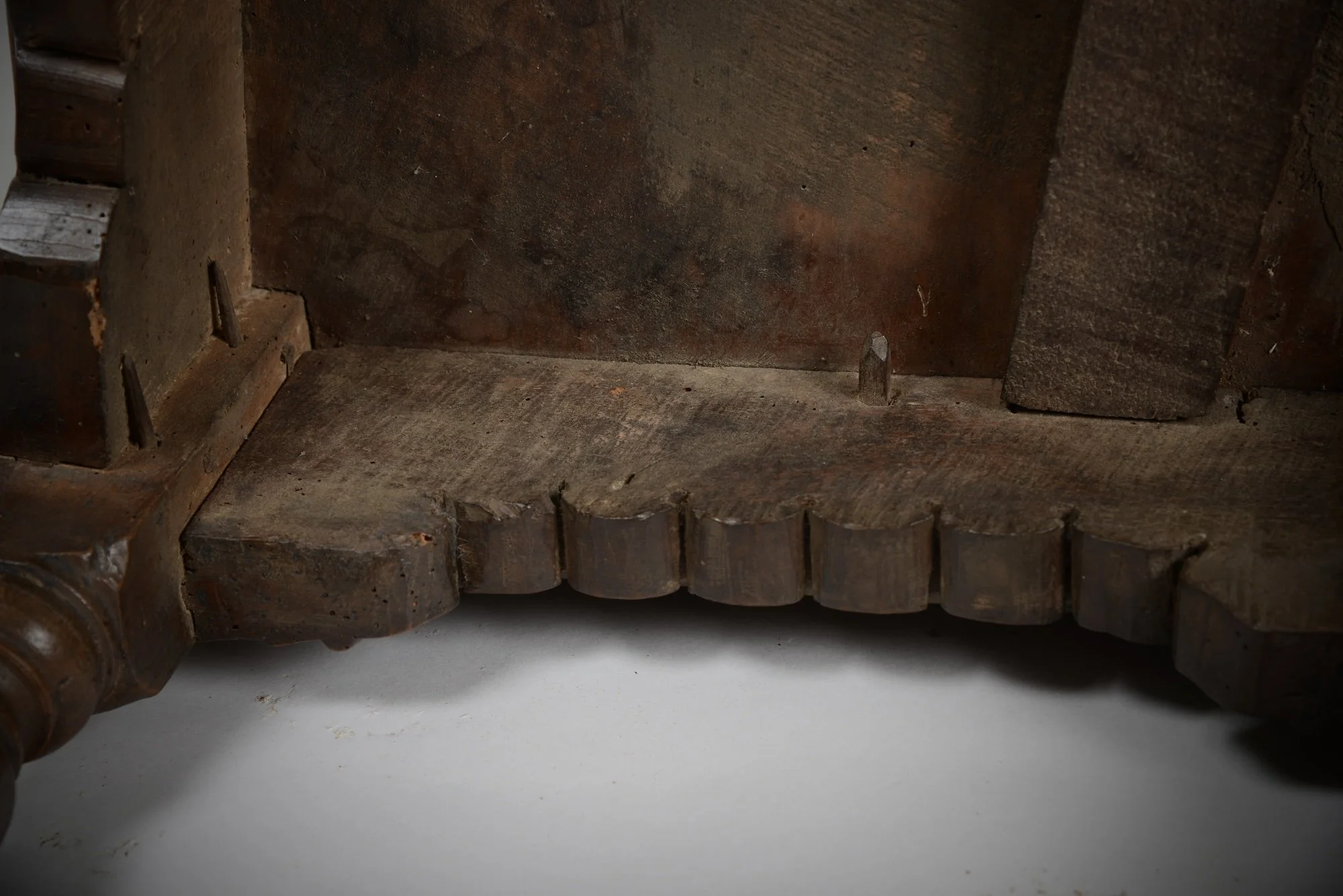 Image 14 of 16
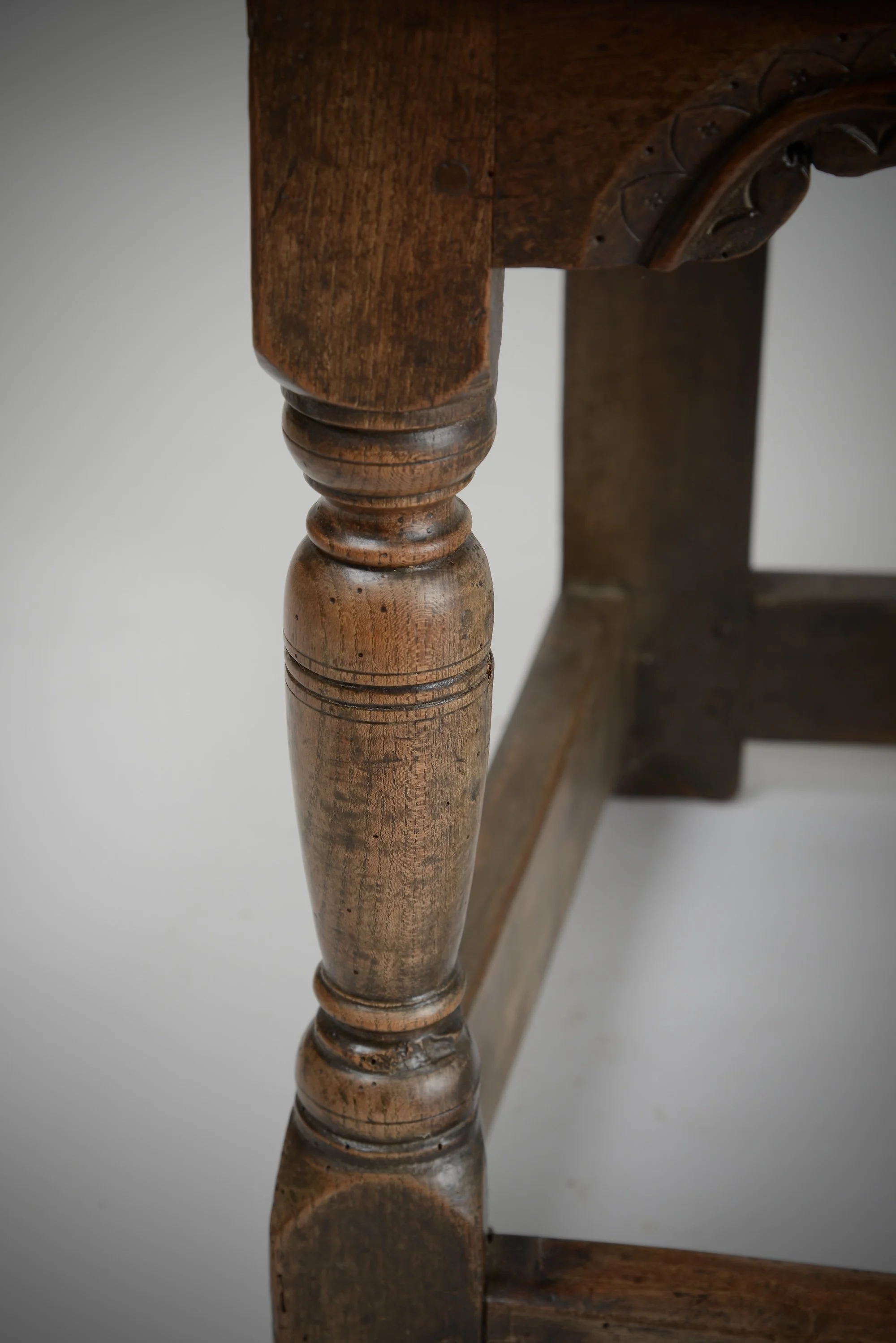 Image 15 of 16
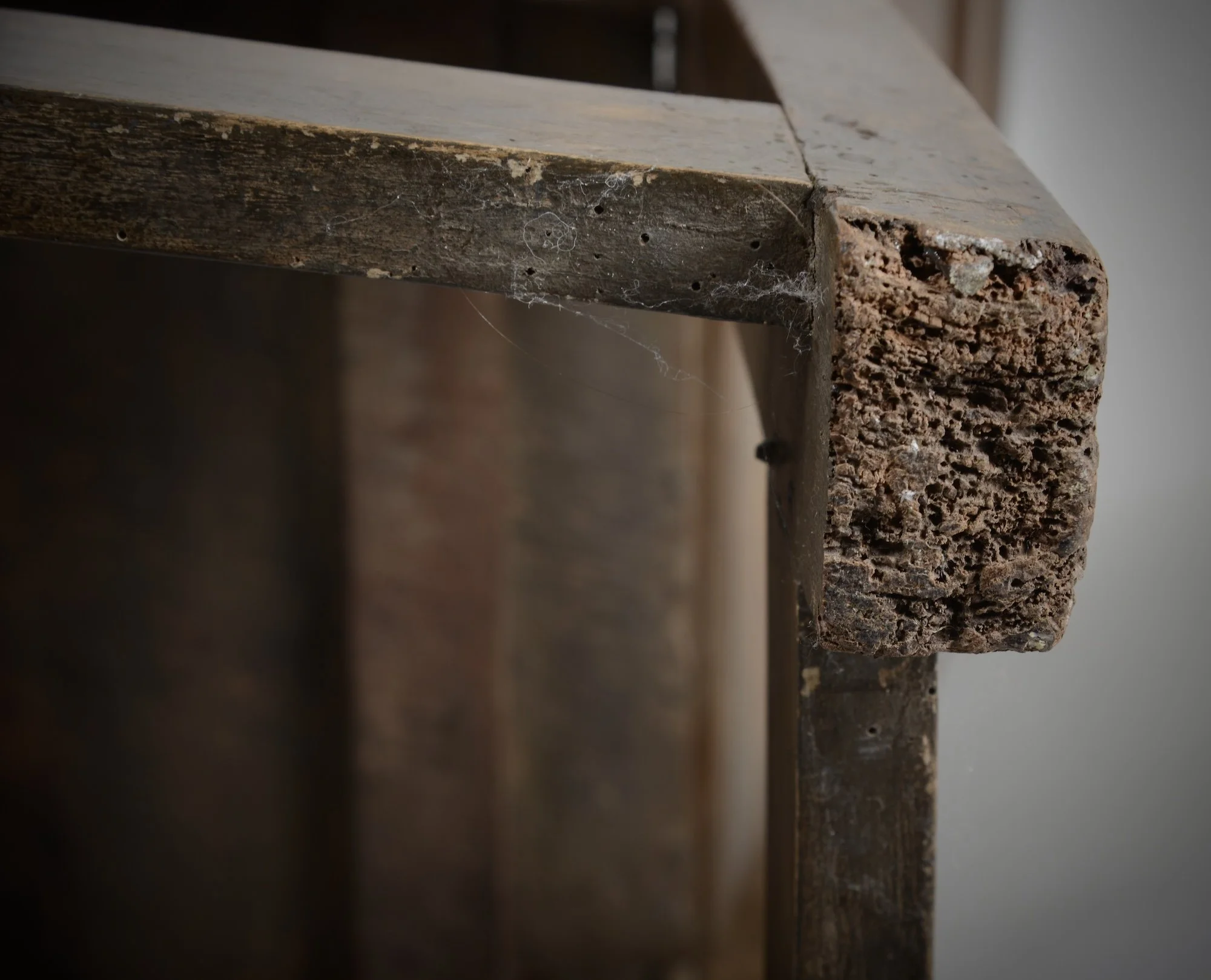 Image 16 of 16